After the Merger: What PSA's Absorption of WATA Means for Sealed Video Game Valuations
The Grading Layer Just Consolidated Under One Roof. Here Is What That Does to the Comps.
Nostalgix Research, Monthly Research Brief | August 2026 | Confidential, Client Use Only
Grading is infrastructure. Most of the time infrastructure is invisible, and the market prices the object rather than the plastic around it. Then the infrastructure changes hands, and collectors discover how much of the price was actually the plastic.
On October 15, 2025, WATA Games stopped producing new slabs. Five days later, PSA began accepting video game and media submissions under the "PSA Video Games" banner. A brand that had defined the sealed-game category since 2017, that had authenticated the first million-dollar cartridge, and that had been a named defendant in a closely watched class action alleging collusion between grader and auction house, ceased to exist as a label. Its population data, its census, and its four-year operating history moved wholesale into the grading operation that, by 2025, already controlled roughly 80% of U.S. card grading capacity.
Ten months later we have enough post-merger transaction data to say something useful about what that transfer did and did not do to price. The headline is reassuring: the highest price ever paid for a video game at public auction was set in June 2026, under a PSA label, at $3 million. The subtext is more complicated. The same parent company now owns the grader, a major auction house, the pricing database, and roughly 80% of U.S. card grading capacity, and it is defending an antitrust suit that alleges the roll-up was built for pricing power. The sealed-game category has inherited a governance question it did not create and cannot opt out of.
Sealed Super Mario Bros., PSA 9.6 A++, June 2026
$3.0M
Retro gaming collectibles market, 2026
$4.18B
Collectors Holdings share of U.S. grading
~80%
Super Mario 64 WATA 9.8 A++, 2021 peak to 2023
$1.56M to ~$240K
What Actually Changed on October 15, 2025
The mechanics of the transition were narrower than the branding suggested, and the distinction matters for anyone holding WATA-slabbed inventory.
WATA was acquired by Collectors Universe in July 2021, terms undisclosed, five months after an investor group led by Nat Turner, D1 Capital Partners and Cohen Private Ventures took Collectors Universe private for approximately $700 million at $75.25 per share in cash. For four years after that acquisition, WATA continued to operate as a standalone brand with its own label, its own grading scale, and its own submission pipeline. The 2025 change was the retirement of that brand, not the retirement of its methodology.
What arrived with the PSA label: post-grading photographs became standard rather than a paid add-on, the holder design was reworked along the lines PSA already uses for comics and magazines, "Dual Service" grading extended into the media vertical, and distribution tightened through existing PSA relationships with eBay and GameStop. Claire Shelton, Head of PSA Video Games, described the switchover as the culmination of "over 2 years of planning."
What did not arrive: a wholesale regrade, a recalibration of the numeric scale, or any invalidation of existing WATA certification. Games in WATA holders remain fully valid in PSA's population database. Their census entries did not move. A WATA 9.8 A++ is still a 9.8 A++ in the pop report, sitting alongside PSA-labelled examples at the same grade.
That continuity was deliberate, and Shelton has been unusually direct about why the company waited four years to pull the trigger.
"I think a necessary part of this was Wata existing for a meaningful amount of time under Collectors, because if they had acquired Wata, and six months later, one year later, switched over to PSA, people would have had no idea what to expect when it came to grading standards, processes or even point of contact. We needed to build trust for how Collectors handled Wata."
And, on the strategic calculus: "It's a bit harder to rebrand something than it is to start from scratch."
Continue reading — full analysis available to Nostalgix members
Access full market analysis, deal flow, and grail-level inventory not listed publicly. Membership begins with a brief inquiry — no charge, no obligation.
Create your free accountAlready a member? Sign in
More from Nostalgix
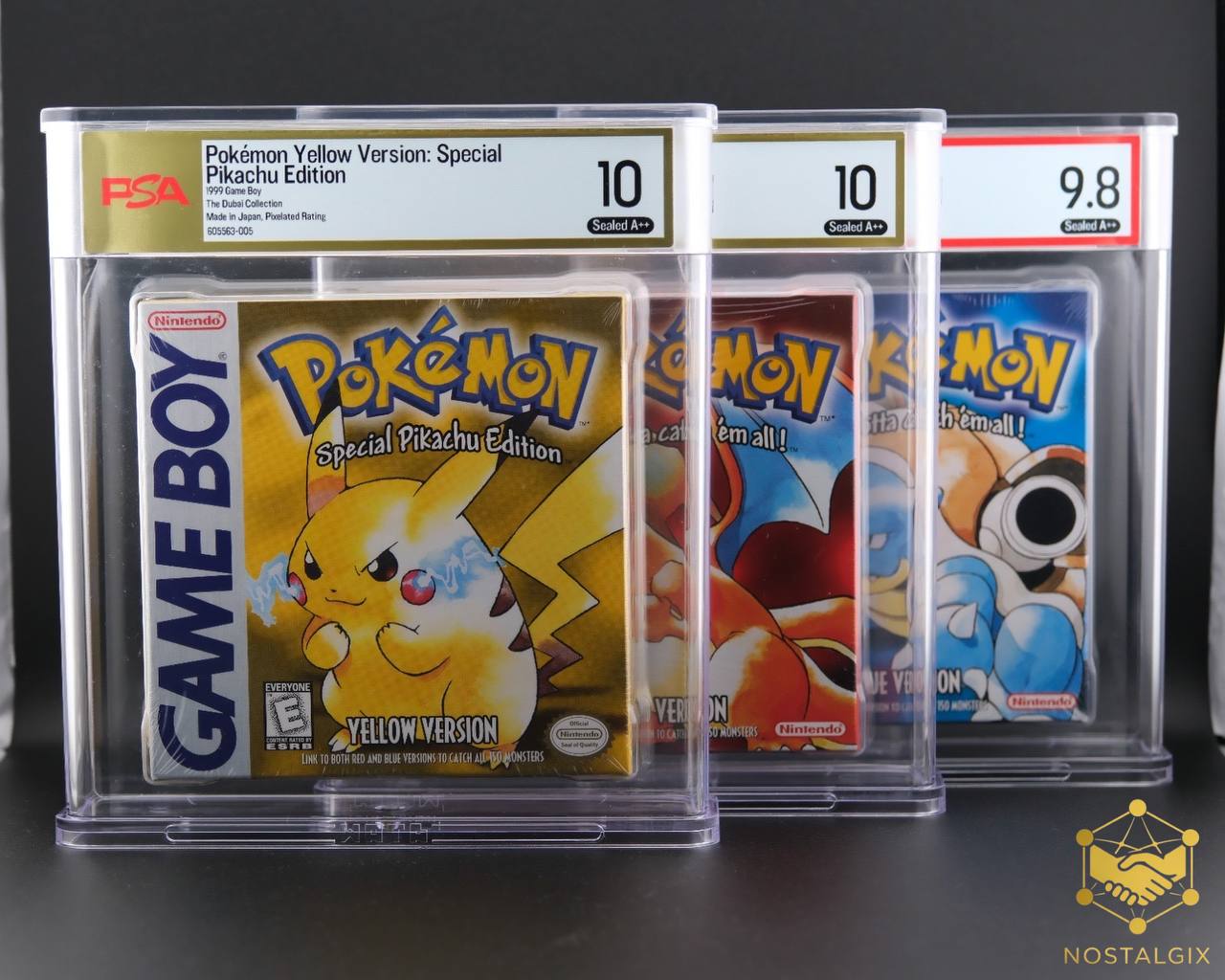
The Dubai Collection: Pokémon Red, Blue & Yellow PSA Lot Sells for $2 million
Nostalgix has brokered the sale of three sealed PSA-graded first-print Generation 1 Pokémon titles from The Dubai Collection, for $2 million. The lot marks the highest recorded sale of Pokémon video games in history.
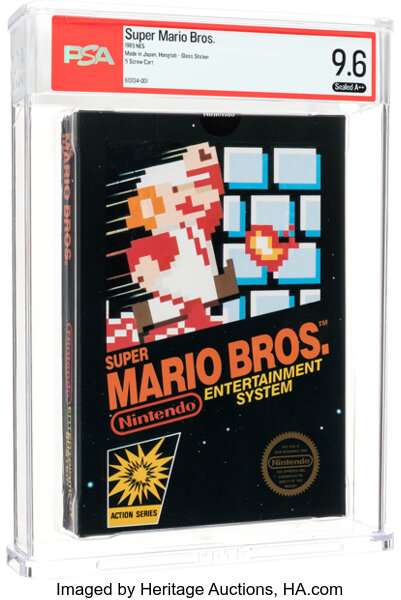
The $3 Million Mario and the Re-Anchoring of the Trophy Tier
A sealed Super Mario Bros. cartridge sold for $3 million in June 2026, setting a new public record for video game collectibles. This transaction clarifies a sharp division between the repriced trophy tier and the segment still navigating market corrections.
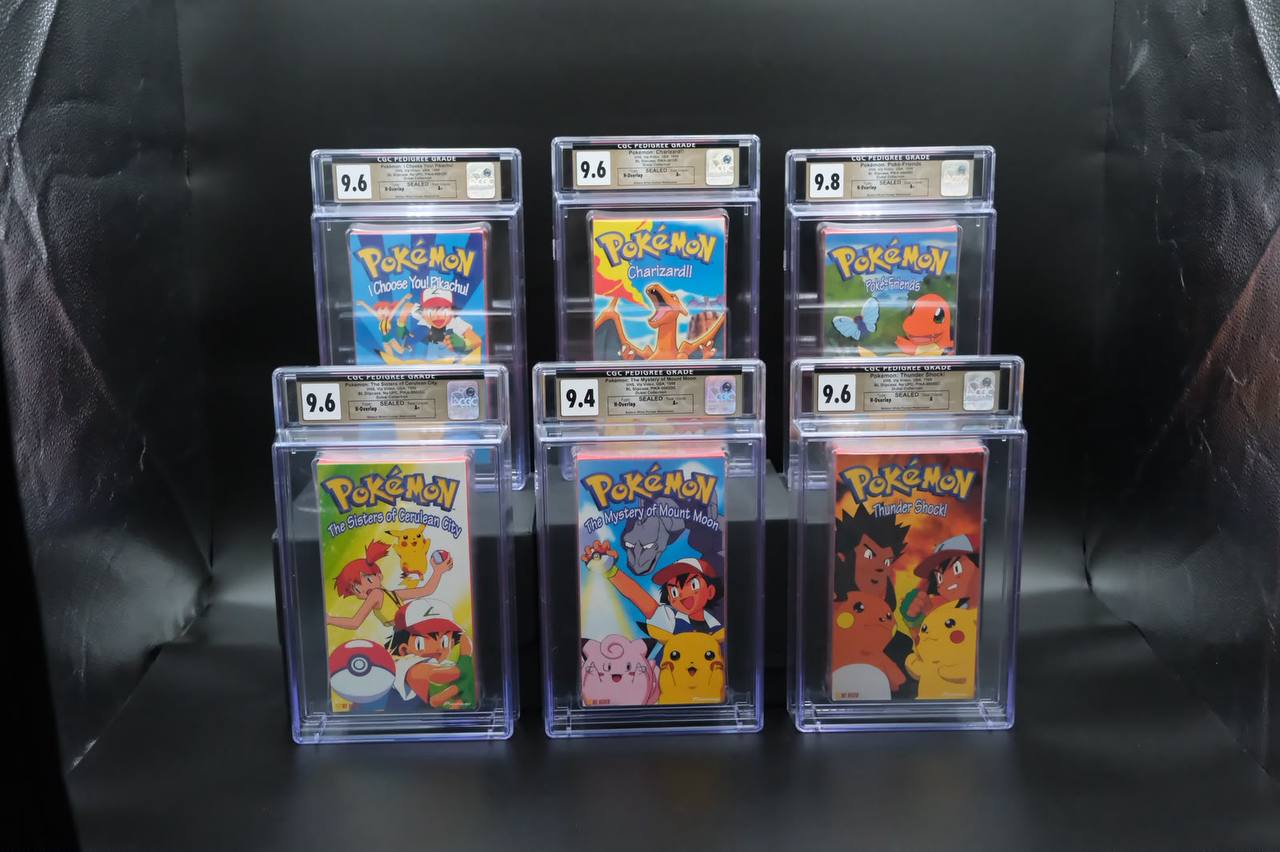
Nostalgix Brokers Two Top-Graded VHS Sets: Pokemon at $85,000 and Rocky at $60,000
Nostalgix has brokered two private VHS sales: the highest-graded Pokemon VHS set for $85,000 and the highest-graded Rocky VHS set for $60,000. Together they put $145,000 of graded tape into private hands.