The Manga Opportunity
Why Original Japanese Art & Key Issues Are the Next Blue-Chip Collectible
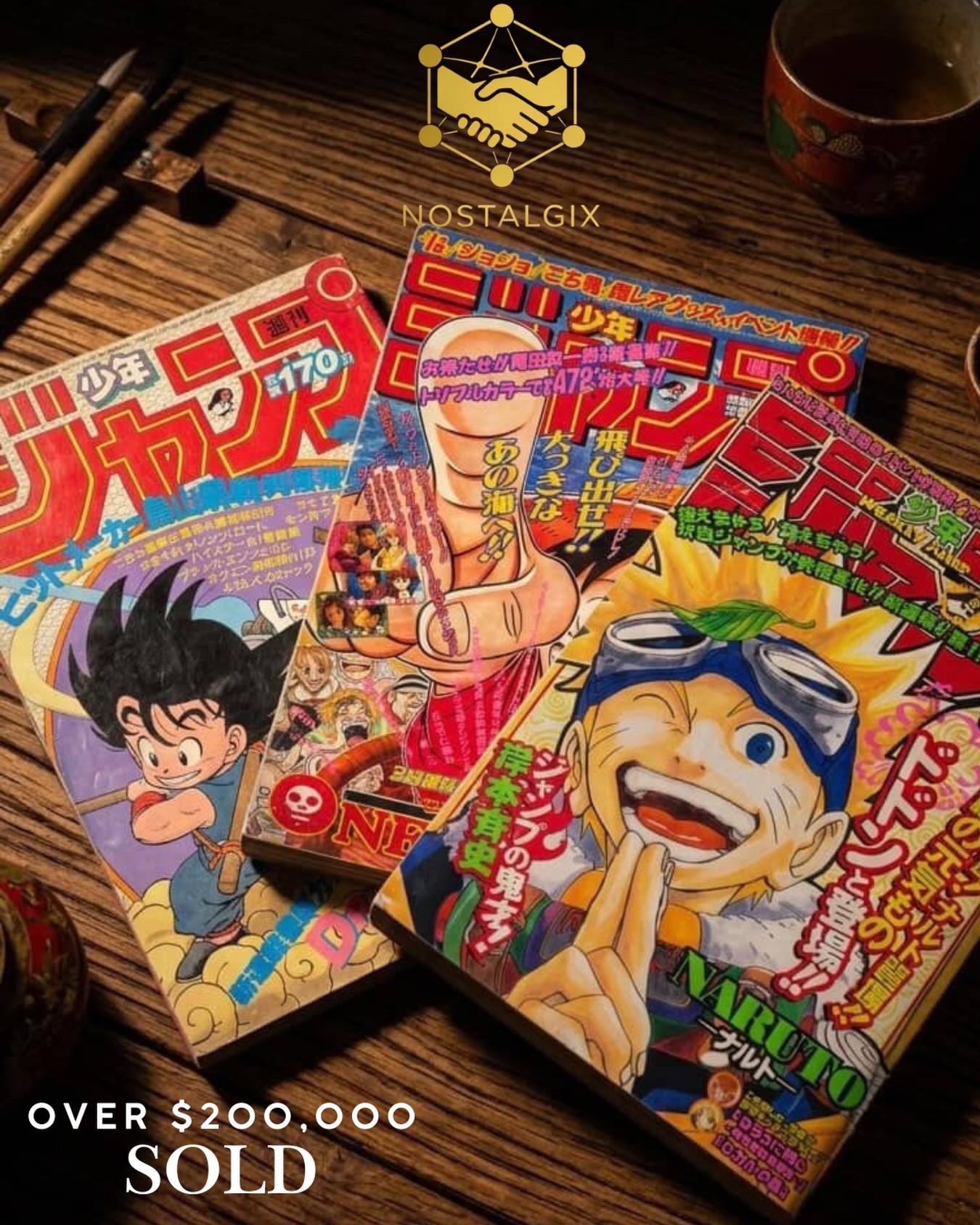
For two decades, Nostalgix clients have acquired significant holdings in Golden and Silver Age American comics, observing considerable value growth on key issues such as Amazing Fantasy #15, Action Comics #1, and early Marvel publications. While that segment remains active, it is increasingly saturated and established. Discerning collectors are considering emerging categories.
One such category is Japanese manga.
Manga — the Japanese comic art form with roots stretching back to the postwar era — is experiencing a structural transformation within the collectibles market. Original artwork is appearing at auction with increasing frequency. First-edition key issues in high grade currently present a notable value proposition relative to their American counterparts. This confluence of factors, including global anime streaming, generational shifts in collecting preferences, and the broader mainstreaming of Japanese pop culture, indicates a period of accelerated interest.
Heritage Anime Art Sales (2025)
$16.6M
Christie's NY Anime/Manga Auction
Mar 2026
Toriyama Art Record (Mar 2026)
$80,500
One Piece Vol. 1 BGS 9.8 Population
2 copies
The Foundation: Manga as Art and Artifact
The story of collecting significant manga begins with a single artist: Osamu Tezuka. Often called the "God of Manga," Tezuka launched Astro Boy (Tetsuwan Atom) in 1952 and Black Jack in 1973, establishing the visual grammar — large expressive eyes, cinematic panel sequencing, emotionally complex narratives — that would define the medium for seventy years. His original pages are a benchmark for the category: the world auction record for Tezuka stands at €269,400 (~$322,000) for an Astro Boy page sold at Artcurial in Paris in 2018, and additional pages traded through Heritage, Tajan, and New Art Est-Ouest in 2025–2026. The de Young Museum in San Francisco exhibited Tezuka originals as part of its landmark "Art of Manga" show, which closed in January 2026 as the first large-scale manga art exhibition ever staged in North America.
The next generation of culturally significant creators emerged in the late 1970s and 1980s. Akira Toriyama launched Dragon Ball in Weekly Shōnen Jump in 1984. Katsuhiro Otomo published Akira — arguably the most technically sophisticated manga ever produced — in Young Magazine beginning the same year. These are not merely popular franchises; they are the works that disseminated Japanese visual culture globally and established the multi-hundred-billion-dollar anime and licensing industries that followed.
The collecting category remained largely informal through the 2000s and early 2010s. The Japanese domestic market for first editions was active but not formally tracked by Western auction infrastructure. American collectors familiar with both markets could acquire high-grade first editions for hundreds or low thousands of dollars. Heritage Auctions introduced formal manga categories around 2019–2020, and the modern market began to take shape.
The Tezuka Benchmark
Osamu Tezuka's original manga pages function similarly to a Kirby or Ditko original in the American context — aspirational anchors that validate the entire category. The auction record of $322,000 for a single Tezuka page was set in 2018 and has not been eclipsed at public auction since, meaning Tezuka originals remain a highly defensible segment of the manga art market. Institutional exhibitions at the de Young (2025–2026) and Christie's New York (2026) have begun to normalize this valuation range for Western collectors.
The Top Tier: What Qualifies and Why
Not all manga is suitable for significant collecting, just as not all American comics are. The criteria that define the top tier are consistent with what drives value in any collectible category: cultural primacy, scarcity in high grade, and clear provenance.
First appearances and first volumes operate under the same logic as key issues in American comics. Dragon Ball Vol. 1 (Shueisha, 1985) introduces Goku in collected form. Akira Vol. 1 (Kodansha, 1984) collects the magazine serialization. Nausicaä of the Valley of Wind Vol. 1 (Tokuma Shoten, 1982) represents a particularly significant Studio Ghibli-adjacent collectible outside of original Miyazaki production art.
Continue reading — full analysis available to Nostalgix members
Access full market analysis, deal flow, and grail-level inventory not listed publicly. Membership begins with a brief inquiry — no charge, no obligation.
Create your free accountAlready a member? Sign in
More from Nostalgix
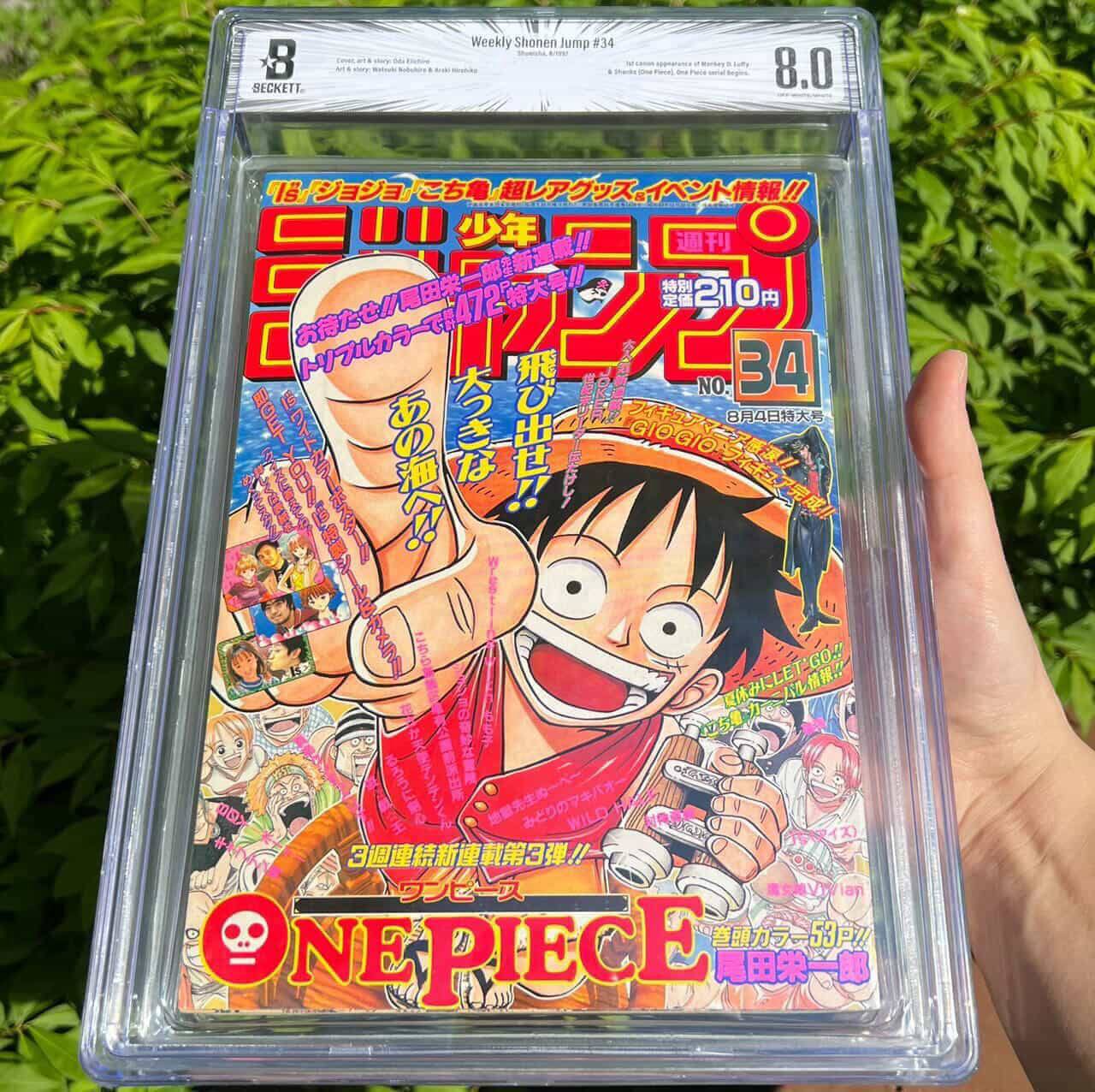
Six-Figure Private Sale: Weekly Shonen Jump #34 BGS 8.0
Nostalgix brokered the six-figure private sale of a BGS 8.0-graded copy of Weekly Shonen Jump #34, one of the scarcest high-grade manga periodicals in the collector market. The deal closed in May 2026 through a fully anonymous, off-market process.
The Serialization Premium: First-Appearance Magazine Issues and the Market for Weekly Shonen Jump No. 34
A disposable 1997 newsstand magazine now anchors one of the strangest supply curves in collectibles. Four reference points for the same issue span a 45x price gap, and the reason has nothing to do with scarcity as collectors usually define it.
The 30-Year Reissue: How Pokémon's Anniversary Calendar Is Repricing Vintage WOTC Print Runs
The Pokémon Company just reprinted Base Set Charizard, Blastoise, and two dozen other WOTC-era icons. The original Charizard didn't fall, it hit new highs, and the data suggests reprints and vintage originals aren't playing the game everyone assumes.