Pokémon Cards 2026: WOTC Vintage vs Modern Market Split
A $16.5M Pikachu Just Reset the Market. Here's What It Means for Your Portfolio.
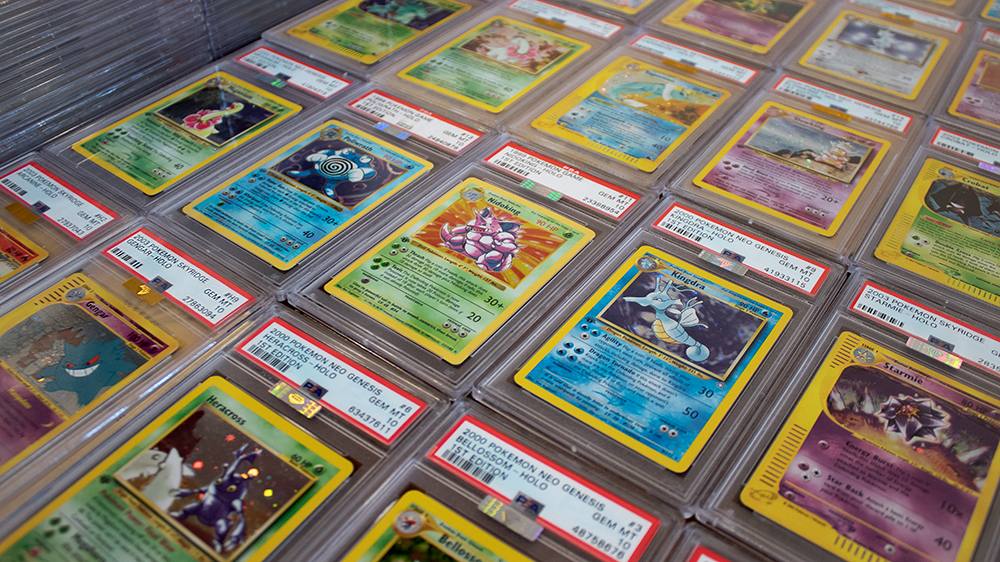
Pokémon Collectibles: Bubble or New Peak?
A $16.5M Pikachu Just Reset the Market. Here's What It Means for Your Portfolio.
In February 2026, a single trading card sold for $16,492,000 at Goldin Auctions. The card was a PSA 10 Pikachu Illustrator, one of 39 copies produced in 1998 and the only example to earn a perfect grade. Logan Paul, who purchased it for $5.275 million in 2022, sold it to AJ Scaramucci, founder of Solari Capital. Guinness confirmed it as the most expensive trading card of any kind ever sold at auction.
That sale did more than set a record. It forced a question collectors have been asking with increasing urgency: is the Pokémon collectibles market a speculative bubble nearing its breaking point, or has it crossed into a new structural phase as a legitimate alternative asset class?
The answer, we believe, is both. But those two realities apply to very different segments of the market, and confusing one for the other is the single most expensive mistake a collector can make right now.
Over the past six months, Pokémon-related deal flow has accelerated sharply across the broader brokerage and auction landscape, concentrated almost entirely in vintage WOTC-era cards graded PSA 9 or above. At the same time, modern card values have corrected 20% to 45% from their 2025 peaks. These are not contradictory signals. The market is telling us, with unusual clarity, that Pokémon collectibles have bifurcated into two distinct asset classes wearing the same brand. One is entering a golden age. The other is repricing after a speculative overshoot.
The Scale of the Franchise
Before examining the collectibles market in isolation, the sheer size of the underlying intellectual property deserves attention. Many traditional collectors still treat Pokémon as a fad, a relic of 1990s nostalgia that will eventually fade. The numbers tell a different story.
Pokémon is the highest-grossing media franchise in history, with cumulative lifetime revenue of approximately $288 billion. That figure surpasses Hello Kitty, Star Wars, Marvel, and Disney Princess. It is not close. The franchise generates revenue across video games, television, film, licensing, and trading cards, which remain the single highest-margin product category.
The Pokémon Company posted operating profit of ¥100 billion (roughly $700 million) for fiscal year 2025, crossing that threshold for the first time. TCG global sales alone reached $2.2 billion in 2024, up 25% year-over-year, bringing the total annual TCG ecosystem to $2.7 billion when secondary market activity is included. Pokémon holds approximately 22% of the global trading card game market, making it the largest single brand in a sector projected to reach $16.9 billion by 2035.
The most common objection we hear from traditional collectors is some version of "Pokémon cards are Beanie Babies for millennials." The comparison collapses on contact with the data. Beanie Babies were a single product line with no ongoing content, no competitive play system, no video game franchise, and no cultural renewal mechanism. Pokémon is a $288 billion media empire that actively generates new fans every generation. The correct comparison is not Beanie Babies. It is Disney, if Disney also manufactured a competitive sport.
Which raises the harder question, if the franchise is durable and the trophy market is institutional, why is the rest of the Pokémon market simultaneously collapsing?
Continue reading — full analysis available to Nostalgix members
Access full market analysis, deal flow, and grail-level inventory not listed publicly. Membership begins with a brief inquiry — no charge, no obligation.
Create your free accountAlready a member? Sign in
More from Nostalgix
The 30-Year Reissue: How Pokémon's Anniversary Calendar Is Repricing Vintage WOTC Print Runs
The Pokémon Company just reprinted Base Set Charizard, Blastoise, and two dozen other WOTC-era icons. The original Charizard didn't fall, it hit new highs, and the data suggests reprints and vintage originals aren't playing the game everyone assumes.
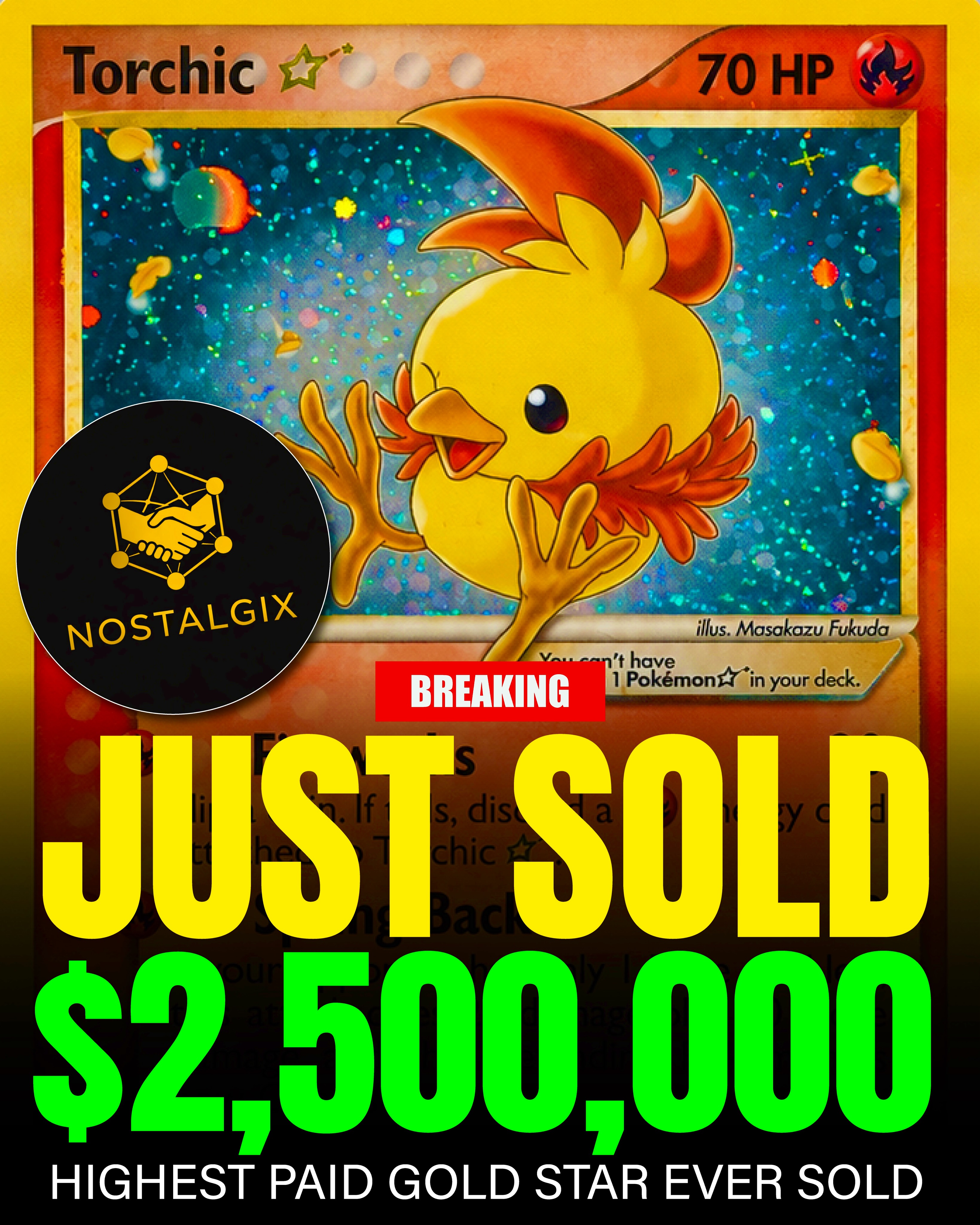
Nostalgix Brokers $2.5M Private Sale of PSA 10 Gold Star Torchic
Nostalgix has brokered the private sale of a PSA 10 Gold Star Torchic for $2,500,000, one of the highest Pokemon card sales ever recorded. The deal closed with full anonymity for both buyer and seller.
The Crystal Tier: Premiums on Crystal Pokemon Set
Nine Crystal Pokémon cards from 2003 have quietly detached from the broader WOTC market, with some PSA 10s appreciating nearly 900% since 2023. A look at what makes a fixed, completable set price on its own terms.